


Key Takeaways
- Before searching for a nearby office, identify whether you need a performance coach, CMPC, licensed clinician, or psychiatrist, because scope-of-practice match matters more than proximity.
- Map the provider type to what you’re actually seeing at home — performance tweaks go to a CMPC, while sleep loss, withdrawal, or post-injury collapse needs a licensed clinician 8.
- Verify credentials in ten minutes using your state licensing board, the AASP registry, and a direct question about telehealth authorization in your athlete’s state 11, 12.
- On the intake call, ask the provider to name their method, explain why they chose it, and describe how progress gets measured at six weeks 4.
- Probe for youth caseload volume, how they distinguish burnout from depression, and how they coordinate with athletic trainers during injury recovery 7, 9.
- Confirm written confidentiality terms, a SAFE-T-aligned crisis response, and clear coordination rules before booking — vague answers here are a dealbreaker 14, 15.
- Choose format by fit, not convenience: telehealth suits road schedules and remote matches, in-person fits acute distress or local coordination needs 17.
- Walk when you hear outcome guarantees, unverifiable credentials, performance-only pitches for clinical symptoms, or pressure to prepay for packages before a session happens 5.
What You’re Actually Shopping For
You typed “sports psychology near me” because something is off. Maybe your kid threw up before a tournament. Maybe they came back from an ACL repair physically cleared but emotionally not. Maybe the group chat and the Instagram comparisons are chewing through their confidence faster than any opponent. Whatever it is, you want a real person to call, and you want to call the right one.
Here’s the shift that will save you a season: you aren’t shopping for a nearby office. You’re shopping for a scope-of-practice match. The person who helps a nationally ranked junior quiet pre-serve nerves is not necessarily the person who should treat a concussed sophomore with new depressive symptoms, and neither one is automatically the person who can coordinate with the athletic trainer when your kid returns to play. Those are three different jobs, sometimes done by three different licenses.
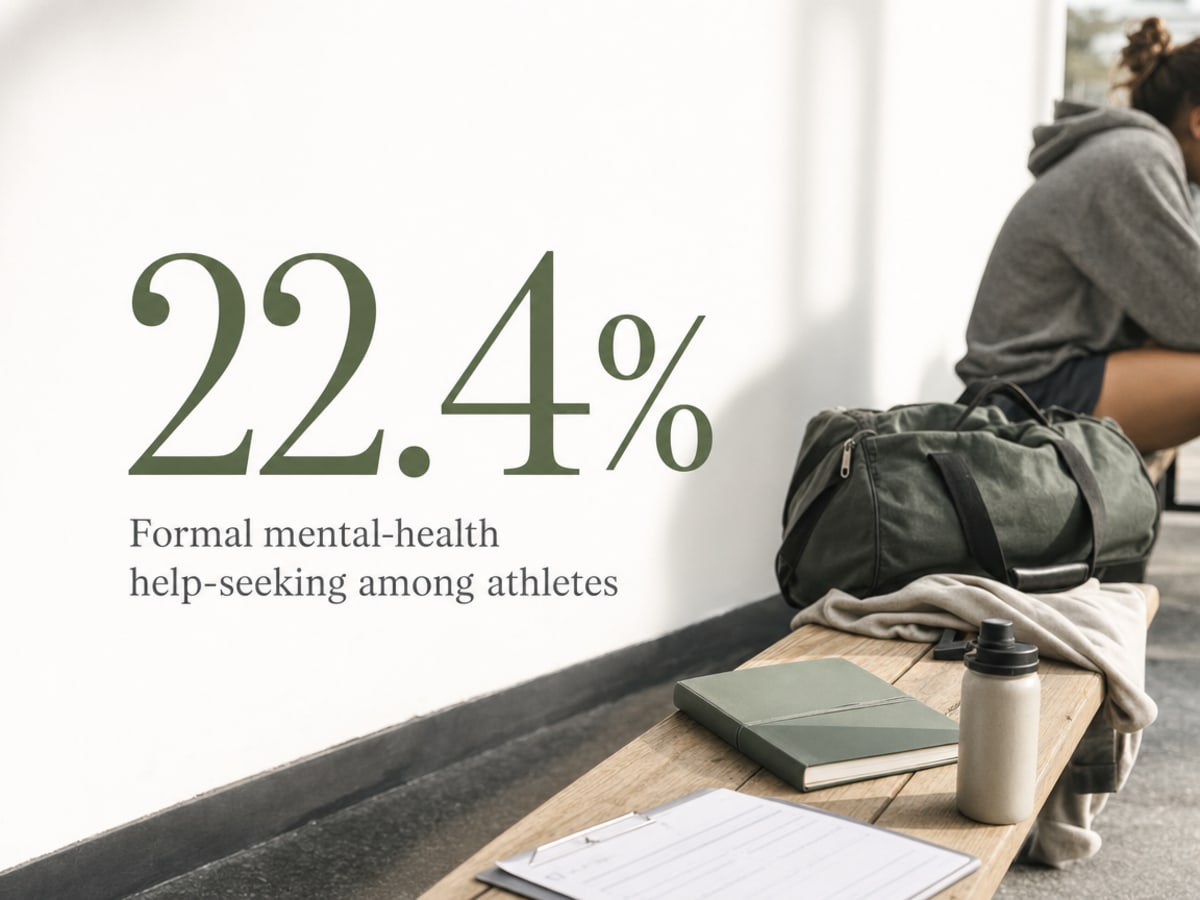
Only about 22.4% of athletes seek formal mental-health help, and the barriers behind that number — stigma, fear of being pulled from the roster, worry that nothing stays private — are the exact concerns your athlete is weighing too 2. That’s not a reason to hesitate. It’s a reason to pick a provider whose approach pulls those fears off the table in the first conversation. The rest of this guide gives you the vocabulary, the credential checks, and the intake questions to do that in a week.
The Scope-of-Practice Map Nobody Hands You
Performance Coach vs. CMPC vs. Licensed Clinician vs. Psychiatrist
Four titles keep showing up when you search, and they are not interchangeable. Knowing which one fits your athlete is the single highest-leverage move you can make this week.
- A mental performance coach or mindset coach
- No required license. Some are excellent former athletes with real training; others took a weekend course and launched a website. They work on focus routines, pre-performance rituals, confidence habits, and goal-setting. They cannot diagnose, cannot treat clinical anxiety or depression, and cannot bill insurance. If your kid is sleeping fine, eating fine, and just wants a sharper pre-game routine, this lane may be the right one.
- A Certified Mental Performance Consultant (CMPC)
- Credentialed through the Association for Applied Sport Psychology, has graduate-level coursework in sport psychology and supervised mentored hours. The CMPC is still a performance credential, not a clinical one, unless the person also holds a clinical license. Many of the best sport-specific performance providers hold this certification.
- A licensed clinician
- Psychologist (PhD/PsyD), LCSW, LMFT, or LPC — can diagnose and treat mental-health conditions. A psychologist who also holds a CMPC is the closest thing to a one-stop shop for an athlete whose performance issue and clinical issue have fused, which the youth-athlete literature says happens more often than parents expect, especially around injury, perfectionism, and burnout 10.
- A psychiatrist
- A medical doctor who can prescribe. You call one when medication is on the table — persistent depressive symptoms, debilitating anxiety, ADHD evaluation, post-concussion symptoms that are not lifting. Psychiatrists usually work alongside a therapist rather than replacing one.
Matching the Provider to What’s Actually Happening at Home
Now put a name to what you’re seeing. Not a diagnosis — just a description, in your own words, of the last two weeks.
If it’s pre-competition nerves, missed free throws under pressure, or a slump that’s really about overthinking, a CMPC-level performance provider is a reasonable first call. Psychological interventions have shown large reductions in state anxiety for athletes, with an even stronger signal in adolescents (SMD −1.04) 6, so this is a lane with real tools.
If it’s tearfulness most days, withdrawal from teammates, sleep that won’t come back, appetite changes, scary thoughts, or a confidence collapse after injury that isn’t lifting, you want a licensed clinician — ideally one with sport fluency. Injury and poorer mental health reinforce each other in young athletes 8, and that loop needs clinical care, not just visualization drills.
If you genuinely don’t know which bucket you’re in, call a licensed clinician who also works in sport. They can treat the clinical layer and the performance layer, or screen your athlete and refer out if coaching is really all that’s needed. Starting one level up is almost never the wrong move. Starting one level down and losing a month to the wrong lane is.
Verifying Credentials and Licensure in About Ten Minutes
You can do this before your next load of laundry finishes. Open two tabs and your phone.
In tab one, pull up your state’s licensing board — department of health, board of psychology, or board of behavioral health, depending on the credential. Type the provider’s full name. You should see an active license, the issue date, and whether there are any disciplinary actions. No record means they aren’t licensed in your state, which is fine for a performance coach but disqualifying for anyone claiming to diagnose or treat.
In tab two, if they advertise a Certified Mental Performance Consultant credential, verify it on the Association for Applied Sport Psychology directory. Credentials get expired, dropped, or embellished. Trust the registry, not the website bio.
One phone call, two tabs, done. If a provider gets defensive about this question, that is the answer.
The Intake Call Script That Earns Its Keep
Questions About Method and How Progress Gets Measured
Most intake calls end with the parent agreeing to a first session and knowing nothing about what will actually happen in it. Fix that in ten minutes. The point here isn’t to interrogate anyone. It’s to find out whether this provider has a method they can name, a reason they picked it, and a way to tell you it’s working.
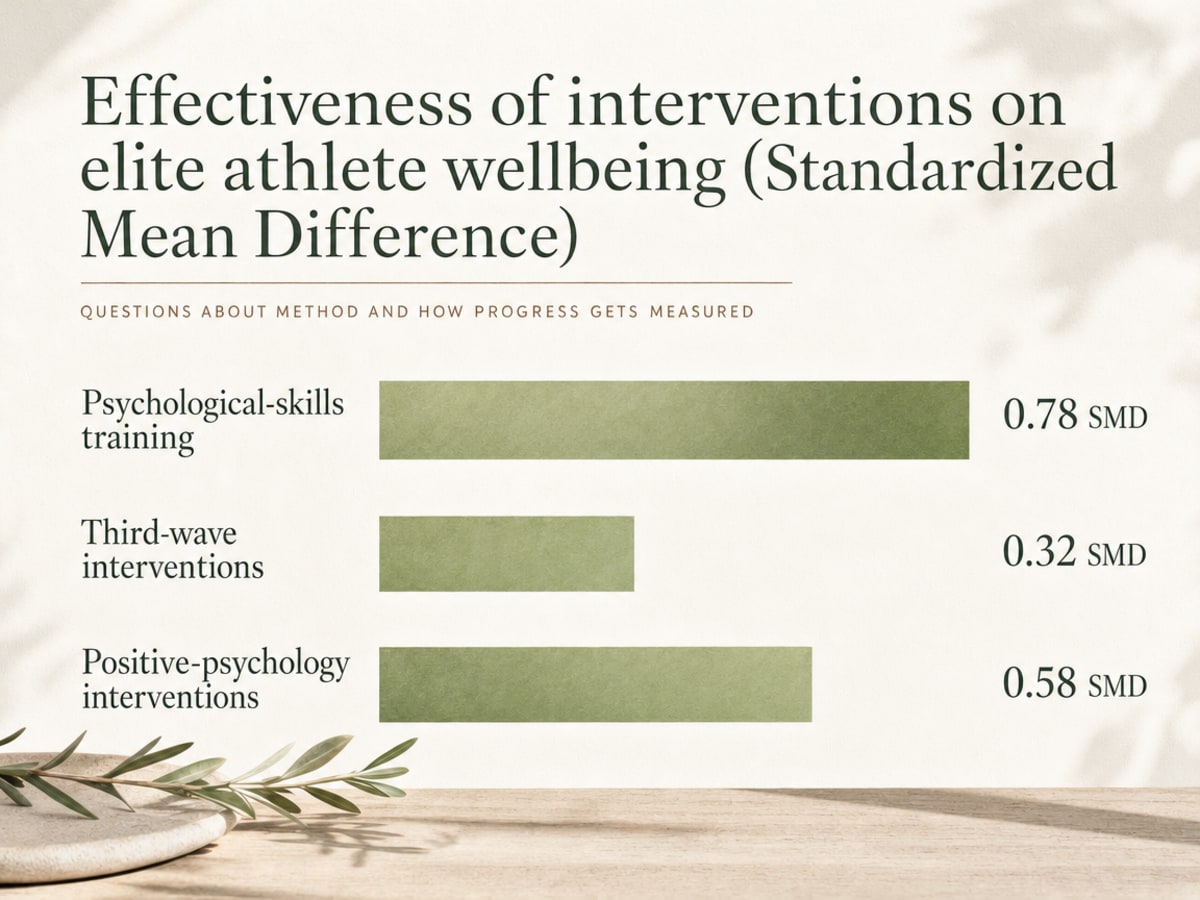
Start with: “What approach do you use with athletes my kid’s age, and why that one?” You want to hear specific names — psychological-skills training, cognitive-behavioral therapy, acceptance and commitment therapy, mindfulness-based work, positive psychology — not a word salad about “holistic frameworks.” A meta-analysis of 15 studies through May 2024 found that psychological-skills training showed the strongest wellbeing effect in elite athletes (SMD 0.78), followed by positive-psychology interventions (SMD 0.58), with third-wave approaches like acceptance and commitment therapy coming in lower (SMD 0.32) 4. None of those numbers mean a provider should promise that result. They mean the provider should be able to tell you which lane they’re in and why they picked it for the issue in front of them.
Then ask the follow-up that most parents skip: “How will we know in six weeks whether this is helping?” A good answer includes an individualized baseline — sleep, pre-competition anxiety ratings, specific behaviors your athlete and the provider agreed to track — plus a check-in cadence and a plan for what changes if the needle isn’t moving. If the only measure is “they’ll feel better,” that’s a problem. Progress gets measured, or it doesn’t exist.
Questions About Youth Experience, Burnout, and the Injury Loop
“How many athletes between 12 and 22 do you see in a typical week?” That one question tells you more than any bio paragraph. You’re looking for someone who works with your athlete’s age range often enough to recognize patterns — not someone who mostly sees adults and takes a youth client when the schedule allows.
Follow it with: “When burnout shows up, how do you tell it apart from depression, overtraining, or a kid who just needs a weekend off?” Cognitive-behavioral and mindfulness-based interventions have shown real effects on burnout dimensions in youth athletes, and online delivery has worked in several studies, but the evidence base is small enough that a provider who claims a single protocol fixes every tired kid is overselling 7. You want to hear them talk about workload, sleep, identity fusion with sport, and when they’d push for a conversation with the coach about rest.
Then the injury question, which matters whether your athlete is currently hurt or not: “If my kid gets injured — or if they’re coming back from one — how do you coordinate with the athletic trainer, PT, and team physician?” Worse mental health is associated with roughly 1.54 times the risk of sports injury in adolescents, and injury and poorer mental health tend to reinforce one another 9. The right provider has release-of-information forms ready, a working relationship with medical staff, or a straightforward plan for building one. The wrong provider treats return-to-play like a separate department’s problem.
Questions About Confidentiality, Crisis, and Coordination
This is the part your athlete most wants you to get right, even if they’d never say so. Ask it in front of them if you can.
Start with: “What stays between you and my kid, what do I get told, and when does that change?” Under HIPAA, a parent is usually a minor’s personal representative, but state law can shift that — some states let minors consent to their own mental-health care, some restrict parent access, and providers can withhold information when they judge that disclosure could endanger the child 14. A strong provider explains their specific state’s rules, hands you a written confidentiality agreement at or before the first session, and tells your athlete directly what their private space looks like 13. Vague answers here are a dealbreaker.
Then the crisis question: “If my athlete tells you they’re thinking about hurting themselves, what happens in the next hour, the next day, and the next week?” You want to hear language that lines up with the SAFE-T framework — risk assessment, a written safety plan the athlete takes home, lethal-means counseling, defined follow-up, and a named role for you or another supportive adult in the plan 15. “I’d call you” is not a plan.
Close with coordination: “If my kid’s coach, school counselor, or team doctor needs to be in the loop, how does that work?” The right answer involves signed releases, the athlete’s input on who gets what, and a provider who sees the support network as part of the work — not an interruption to it.
In-Person, Telehealth, or Hybrid: Picking the Format
The format question gets treated like a logistics problem. It’s really a fit problem. The right answer depends on your athlete’s age, what’s actually going on, and whether the provider you want is in your city or two states away.
Telehealth tends to work well for teens who prefer typing to talking, athletes on the road for tournaments, and families whose best-match provider isn’t local. In a survey of 275 elite athletes, 94.2% preferred an individual smartphone-based program over group or in-person-only formats, 92% rated coping with pressure as a highly relevant topic to work on, and 90% rated self-worth and self-esteem the same way 17. That’s a strong signal that remote care isn’t a lesser option for this population — but it also means you have to screen for whether the provider actually individualizes the work. A standardized module library pushed to every athlete isn’t the same as a provider who adapts between sessions.
In-person makes more sense when your athlete is in acute distress, when you need the provider inside the coordination loop with an athletic trainer or team physician who’s also local, or when your kid is young enough that an hour on a screen won’t hold them. Hybrid — most sessions remote, periodic in-person check-ins — splits the difference when travel is the only barrier.
One non-negotiable before you book a telehealth slot: the appointment legally occurs where your athlete sits, so the provider must be authorized to practice in your state, not just theirs 11. Ask that question once, in writing if possible. Good providers answer it in a sentence.
Social Media, Identity, and the Conversations You’re Losing at Home
You already know the Instagram thing is a problem. Your athlete is comparing their highlight tape to someone else’s committed-to-D1 announcement, reading comments after a bad game, and sleeping with the phone face-down but on. The U.S. Surgeon General’s advisory on youth mental health is unusually blunt that social media can pose profound risks to adolescent wellbeing — comparison, cyberbullying, exposure to harmful content, privacy erosion, and sleep disruption all show up in the file 16. You don’t need another lecture from a provider who tells your kid to delete the app. You need someone who actually works in this terrain.
Screen for it on the intake call. Ask: “How do you talk with athletes about social media, name-image-likeness pressure, and the gap between their public identity and who they are off the field?” You want to hear specific examples — a recruit who stopped posting during slumps, a captain who muted the team group chat before games, a kid whose identity collapsed when the follower count did. Generic “we work on mindfulness around tech” is not an answer.
The deeper issue underneath the phone is identity fusion with sport. When your athlete is one bad weekend from feeling like a different person, no screen-time rule fixes that. The right provider treats this as its own clinical thread, not a logistics gripe.
Family Coordination Without Stepping on the Athlete’s Privacy
Here’s the tension you’re going to feel the whole way through this: your athlete needs their own confidential space with the provider, and they also need you in the loop enough to drive them to appointments, notice warning signs at home, and be a landing pad when a session stirs something up. Those two things aren’t in conflict if the provider sets it up right.
The evidence that your involvement matters is strong. A 2025 meta-analysis of 40 studies covering 14,462 athletes found that social support correlated positively with wellbeing (r=0.31) and negatively with anxiety (r=−0.22), depression (r=−0.27), and stress (r=−0.25) 18. Family and friend support showed particularly meaningful associations with depressive symptoms. You being present — in the right way — is part of the treatment, not an interference with it.
What “the right way” looks like, concretely: ask the provider to build a family communication plan at intake. Not a generic one. A specific one where your athlete helps decide what gets shared, how often, and through what channel. A good provider might offer a monthly 15-minute parent check-in that covers themes without disclosing content, a shared document of behavioral goals you can actually support at home, and a clear agreement about what triggers an immediate call to you — safety concerns, missed sessions, major shifts.
What it doesn’t look like: you texting the provider for session recaps, or your athlete finding out you got a report they didn’t know about. The fastest way to lose their trust in the whole process is to make them feel surveilled. If a provider agrees to arrangements that bypass your athlete’s input, that’s not family-friendly care. That’s a provider who doesn’t understand that the athlete has to own this work for it to stick.
Red Flags, Guarantees, and When to Walk
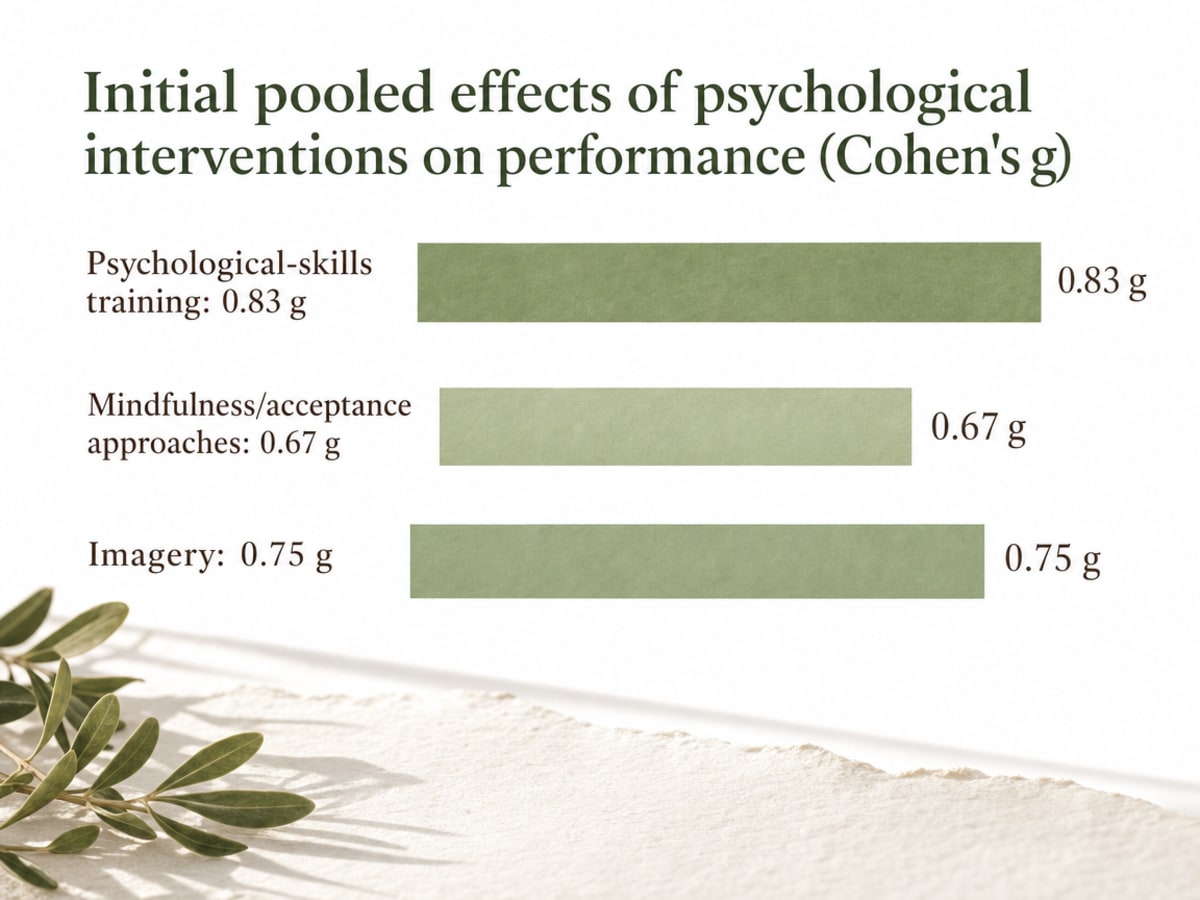
Some things you hear on an intake call should end the call. A provider who guarantees a result — fewer errors, a confidence spike by playoffs, no more pre-game nerves — is telling you they don’t understand their own field. The performance-intervention literature is instructive here: initial pooled effects for psychological-skills training, mindfulness, and imagery looked moderate, but those effects did not survive sensitivity analyses that excluded weaker study designs 5. Honest providers quote the direction of the evidence and track your athlete’s actual data. They don’t promise outcomes nobody can promise.
A few more that should move you to the next name on the list:
- Vague answers about confidentiality and what you’ll be told as a parent.
- No written safety plan, no clear next step if your athlete says something scary.
- A performance-only pitch when you’ve described sleep loss, tearfulness, or a confidence collapse after injury.
- Dismissiveness about coordinating with the athletic trainer or team physician.
- Pressure to pay for a long package before a single session has happened.
- A credential you can’t verify on a state board or the AASP registry.
Walking isn’t failure. It’s the parent version of calling your own number. Trust it.
Your One-Week Decision Plan
You don’t need a month. You need seven days and a plan that fits around practice.
Monday and Tuesday: Name what you’re seeing in two sentences — the specific behavior, how long it’s lasted, and whether sleep, appetite, or mood is involved. That description tells you whether you’re calling a CMPC-level performance provider or a licensed clinician. Pull three names from your pediatrician, the athletic trainer, and one parent whose kid has been through this. Referrals from people inside the sport beat Google rankings every time.
Wednesday: Spend ten minutes on each name — state license board, AASP registry if they claim CMPC, telehealth authorization in your state 11, 12. Cut anyone who doesn’t verify.
Thursday and Friday: Book 15-minute intake calls with the two who survived. Run the method, youth-experience, injury-coordination, confidentiality, and crisis questions. Listen for a written safety plan and a measurable six-week check-in.
Weekend: Talk to your athlete. Let them pick between the two finalists. The one they choose is the one they’ll actually open up to.
You made the call. That’s the hardest part, and you already did it.
Start Your Athlete’s Personalized Mental Fitness Journey
Connect with a coach to discuss your athlete’s goals and create a tailored mental wellness plan.
Frequently Asked Questions
What’s the difference between a mental performance coach and a licensed sports psychologist?
A mental performance coach works on focus, routines, and confidence habits. No license is required, so quality varies widely. A licensed sports psychologist holds a clinical credential (PhD, PsyD, LCSW, LMFT, or LPC) and can diagnose and treat anxiety, depression, and other conditions. If your athlete is in clinical distress — not just overthinking a slump — you want the clinician 10.
Will seeing a sports psychologist hurt my child’s roster spot or get them labeled?
This fear is one reason only 22.4% of athletes seek formal mental-health help 2. The honest answer: a good provider protects your athlete’s privacy, keeps records separate from coaching staff, and shares nothing with the team without written consent. Nobody at school or on the roster finds out unless your athlete chooses to tell them. Ask that question directly on the intake call.
How does confidentiality work when my child is a minor?
HIPAA generally makes you your minor’s personal representative, but state law often overrides that — some states let minors consent to their own mental-health care, and providers can withhold information when disclosure could endanger the child 14. A strong provider gives you a written confidentiality agreement at intake that spells out what stays private between them and your athlete, what you’ll be told, and what triggers a call home 13.
Does telehealth count, and how do I verify the provider can legally see my athlete?
Yes, telehealth counts — but the appointment legally occurs where your athlete is sitting, not where the provider is 12. The provider must be licensed in your athlete’s state or authorized through a compact like PSYPACT for eligible psychologists 11, 12. Ask: “Under what mechanism are you authorized to see my athlete in our state?” If the answer is vague, book someone else.
What questions should I ask on the first intake call?
Five that matter: What method do you use with athletes this age, and why? How many athletes between 12 and 22 do you see weekly? If my kid gets injured, how do you coordinate with the athletic trainer and team physician? What stays private, what do I get told, and when does that change? If my athlete says they’re thinking of hurting themselves, what happens next?
How will we know if the work is actually helping?
Ask the provider to set an individualized baseline at session one — sleep, pre-competition anxiety ratings, specific behaviors you and your athlete agreed to track — and check it at six weeks. Honest providers quote the direction of the evidence rather than guaranteeing outcomes, because performance-intervention effects don’t always hold up under stricter study designs 5. Measurable progress or a change in plan. Those are the only two acceptable answers.
References
- The Mental Health of Elite Athletes: A Narrative Systematic Review. https://pubmed.ncbi.nlm.nih.gov/26896951/
- Athlete mental health help-seeking: A systematic review and meta-analysis of rates, barriers and facilitators. https://pubmed.ncbi.nlm.nih.gov/38128709/
- An updated systematic review of interventions to increase awareness of mental health and well-being in athletes, coaches, officials and parents. https://pubmed.ncbi.nlm.nih.gov/35590425/
- Psychological Interventions to Improve Elite Athlete Mental Wellbeing: A Systematic Review and Meta-analysis. https://pubmed.ncbi.nlm.nih.gov/39815135/
- Effects of Psychological Interventions to Enhance Athletic Performance: A Systematic Review and Meta-Analysis. https://pubmed.ncbi.nlm.nih.gov/37812334/
- Effects of psychological interventions on anxiety in athletes: a meta-analysis based on controlled trials. https://pubmed.ncbi.nlm.nih.gov/40851578/
- Burnout and Mental Interventions among Youth Athletes: A Systematic Review and Meta-Analysis of the Studies. https://pubmed.ncbi.nlm.nih.gov/36078376/
- Sports Injuries and Mental Health in Child and Adolescent Athletes: A Systematic Review. https://pubmed.ncbi.nlm.nih.gov/42650414/
- Bidirectional Relationship Between Mental Health and Sports Injury in Adolescents: A Systematic Review and Meta-analysis. https://pubmed.ncbi.nlm.nih.gov/41528417/
- Mental Health in the Youth Athlete. https://pubmed.ncbi.nlm.nih.gov/37949505/
- Licensure for behavioral health. https://telehealth.hhs.gov/licensure/licensure-for-behavioral-health
- Licensure compacts. https://telehealth.hhs.gov/licensure/licensure-compacts
- Information Related to Mental and Behavioral Health, including Opioid Overdose. https://www.hhs.gov/hipaa/for-professionals/special-topics/mental-health/index.html
- Can a minor child’s doctor talk to the child’s parent about the patient’s mental health status and needs?. https://www.hhs.gov/hipaa/for-professionals/faq/can-minor-childs-doctor-talk-childs-parent-about-patients-mental-health-status-and-needs.html
- SAFE-T (Suicide Assessment Five-Step Evaluation and Triage) Flier. https://library.samhsa.gov/sites/default/files/safet-flyer-pep24-01-036.pdf
- Social Media and Youth Mental Health. https://www.hhs.gov/sites/default/files/sg-youth-mental-health-social-media-advisory.pdf
- Needs and Demands of e-Mental Health Interventions for Elite Athletes: User-Centered Design Approach Based on a Cross-Sectional Study. https://pubmed.ncbi.nlm.nih.gov/39936230/
- The relationship between social support and mental health in athletes. https://pubmed.ncbi.nlm.nih.gov/40969465/
- a systematic review and update to the “Mental Health through Sport” conceptual model. https://pubmed.ncbi.nlm.nih.gov/41814431/